


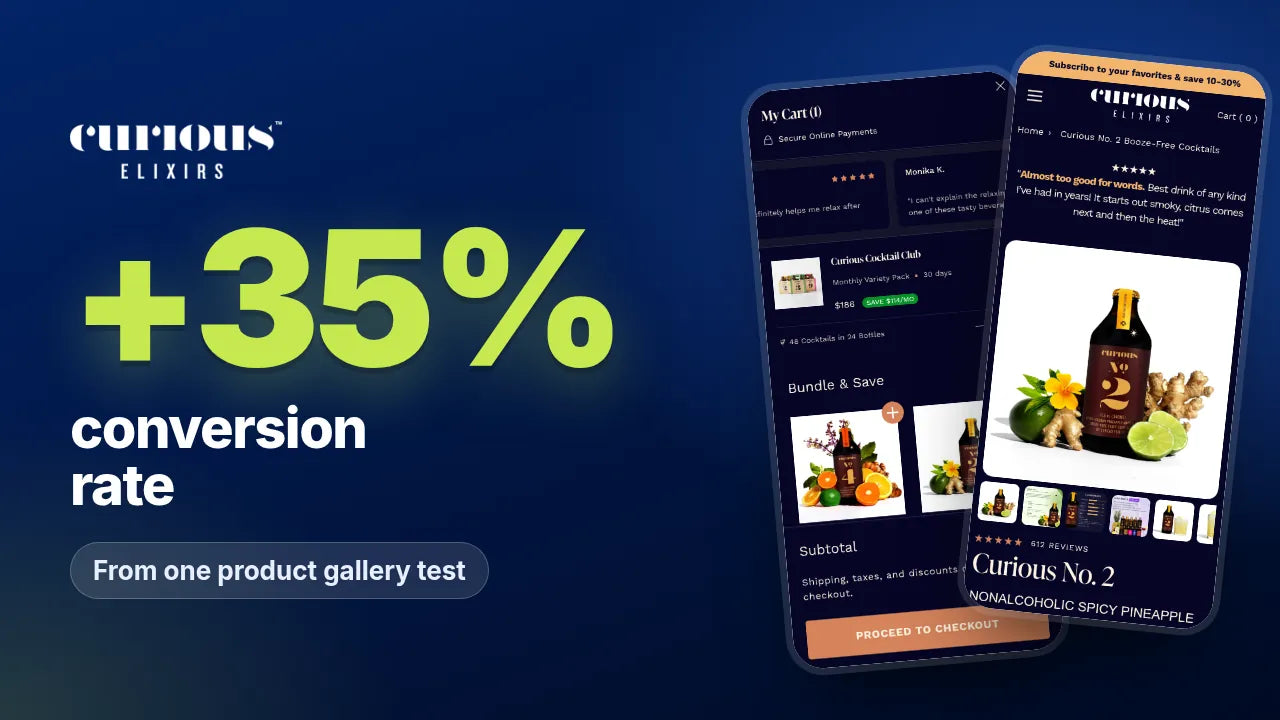

Subscription CRO offers: tiered gifting and upsells

Short answer: The subscription offers working best right now, according to Paddy McLarnon, founder of PM Digital, are a decent first month discount, gifted tiers that grow the longer someone subscribes, and a post purchase upsell to a bigger quantity. On Retention Live with Jordan O'Connor of Retention For Brands, he explains why you fix site speed and broken widgets before any of it.
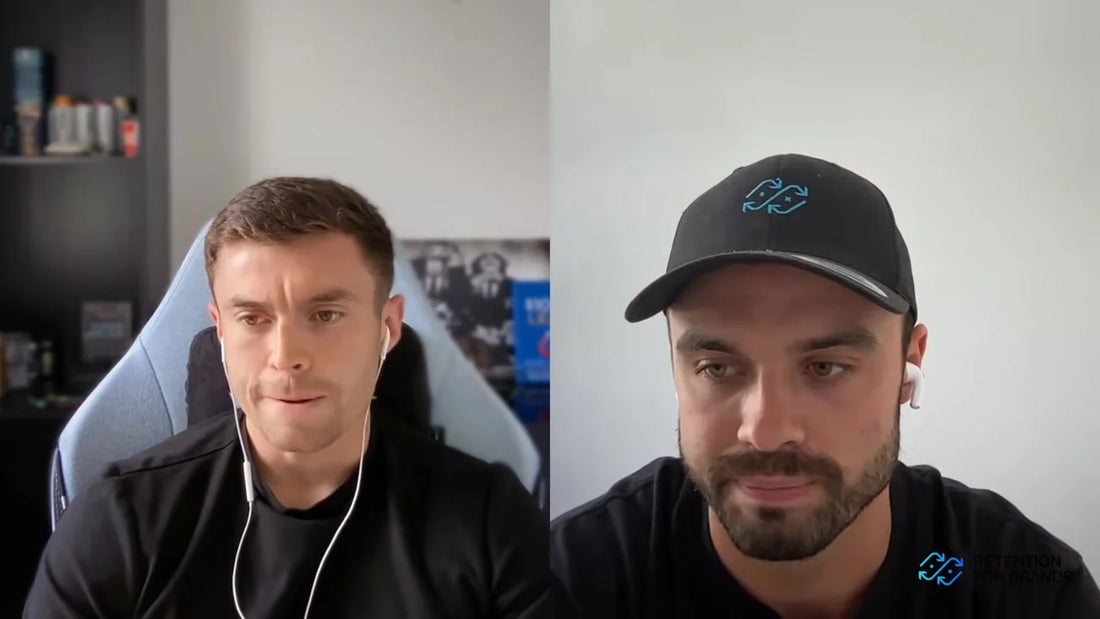
This conversation went out on the Retention For Brands YouTube channel on 18 September 2026 as Retention Live episode 11. Jordan and Paddy share clients, and both lean towards subscription brands, so the chat goes straight to what moves conversion rate: the basics most teams skip, how we test funnels, which subscription offers work, and the mistakes we see page by page. Paddy is the guest here. You can find more of his guest spots in our CRO Learning Hub.
The show
Who is Jordan O'Connor and what is Retention For Brands?
Jordan O'Connor is the founder of Retention For Brands. On its YouTube channel he sits down with the founders, operators and software teams building DTC brands. On its own site, Retention For Brands says it helps ecommerce brands reduce acquisition costs and boost lifetime value through retention systems, which is the email and retention side of the funnel that sits next to our work on the site.
That split matters for this episode. Jordan's team handles email and retention, we handle the site and the landing pages, and the creative team feeds both. As Paddy puts it, the site and the landing pages feed off all of them, so the teams have to work as one.
Subscription offers
What subscription offers are working best right now?
Jordan asks Paddy to put his money on one offer. Paddy's first answer is that it depends on margin: what can the brand actually afford to give away? From there he walks through the offers he likes most at the moment.
Tiered gifting that grows with tenure
His favourite is a decent percentage off the first month, then gifted tiers that unlock the longer someone subscribes. Month one gets this, month two gets this, month three gets this, and it all sits on the subscription widget so the shopper sees it before they buy. The aim is two things at once: more lifetime value, and enough incentive up front to improve cost per acquisition. Paddy suggests mixing digital and physical gifts, and reminds brands that physical gifts still need shipping.
Earlier in the episode he explains why free gifts are so underused. People call them clickbait, but the real power is exclusivity. If a subscriber wears your hat, other subscribers know they only got it by staying subscribed. The gift also has to back what you sell. A random brush does not belong with electrolytes.
Post purchase upsells to a bigger quantity
The second idea is what we are doing a lot of right now. Once someone has bought, offer them a bigger quantity up front on the post purchase upsell. The brand has paid the same to acquire that customer, so the extra order value comes with no extra acquisition cost. Paddy says the cash conversion cycle improves, the brand is more profitable, and the conversion rate and revenue per visitor of the whole site go up. Our guide to post purchase upsell strategy on Shopify covers the set up.
Simple discounts and mixed trial packs
If the product and the marketing are good enough, a simple discount that stays the same every month can work a treat. Paddy also likes mixed packs for brands with several flavours: put three flavours into one pack for first time customers who do not fully trust you yet, then let them come back and subscribe to the one they like.
One honest warning from Paddy: offers run out of steam. We have had offers we thought were nailed, then gone back to the drawing board after about nine months to freshen them up.
| Offer | What it does | Watch out for |
|---|---|---|
| A decent percentage off month one | Gets the first order over the line from cold traffic | Margin: only give away what you can afford |
| Gifted tiers that grow with tenure | Lifts lifetime value and gives a reason to stay | Gifts must back what you sell; physical gifts still need shipping |
| Post purchase upsell to a bigger quantity | More cash up front on the same acquisition cost | Do not push so hard that customers never need to come back |
| A simple consistent discount every month | Works when the product and marketing are strong enough | Still needs testing against the alternatives |
| A mixed trial pack, such as three flavours | Lowers the risk for first time buyers who do not trust you yet | Follow up so they subscribe to the flavour they like |
Fix it first
Why fix site speed and broken widgets before testing?
When Jordan asks what Paddy looks at first in an audit, the answer starts with a rule we use internally: focus on what the customer sees, what they click and what they say. There is no point working on the footer when nobody sees it.
Then come the fundamentals people neglect. Of all the tests a brand could run, if the site speed is poor, you are only lifting small percentages. So we fix what is broken first, every time we take a brand on: site speed, bugs, a full QA process, and even ADA compliance, because brands in the US are being sued over accessibility. Jordan compares it to email deliverability. If the foundations are broken, it does not matter how good the offer is.
Paddy gives a real example. For a brand in South Africa, the subscription widget was not loading correctly, which they found through screen recordings. We fixed it and improved the site speed, and according to the episode, conversion rate went up 40 to 50 percent inside a week. That result is why he now wants the basics checked every quarter, not only when we start. Our CRO audit framework shows how we run that first pass.
Testing
How should subscription brands test their funnel?
Paddy is clear that subscriptions are not set and forget. Brands that grew through bundles and offers can see cost per acquisition and CPMs jump when they add subscriptions, depending on whether it runs as a separate campaign or ad set. It is a technical layer, but it can be done.
The order matters. The creative has to be nailed first. Once an angle is proven and has enough spend behind it, that is when we build a landing page or funnel for it. Why spend the energy building pages for an angle nobody has proven? We aim for one to two offer tests a month, depending on traffic and the brand, covering offer copy, the angle and how we educate the shopper.
Then comes the subscription widget itself. Is the offer displayed clearly? Do shoppers understand what they are getting? Many people are wary of the word subscription, and Paddy says both older and younger audiences can be sceptical for different reasons. You have to make it clear that it is a routine, then back that up with your money back guarantee or returns policy. Our post on subscribe and save best practices goes deeper on the widget.
Product pages
What should product page images do?
Paddy disagrees with building product pages only for bottom of funnel traffic. A shopper who has seen three or four ads still needs the page to say what the ads said. If the ad talks about bloating, the product page should too. Then make the offer clear: what it saves them, what it costs, and simple details like whether it is a 30 pack.
Product images are one of the most underused places to educate, handle objections and show social proof. His advice is to treat the gallery like landing page sections: show there are more images so people scroll, then cover the benefits, what to expect and when, an ingredient breakdown, and real reviews that sound like your audience. Someone should be able to swipe through seven images and know exactly what they are buying. He also points out that scroll depth is low on most sites he sees, so put the energy into what people see at the top of every page.
Metrics
Which metric matters most: AOV, CAC or conversion rate?
Jordan sees clients fixate on one number: some on AOV, some on conversion rate, some on CAC. Paddy's view is that they all interact. Revenue per visitor is the term everyone uses, but you have to break it down. If conversion rate breaks tomorrow, the business loses money fast, so fixing a broken conversion rate still comes first in his book.
Past that, it is a balance. Push AOV too far and conversion rate, cost per click, CPMs and CAC can all suffer. Subscription take rate is great, but not on its own if order value is tiny. Jordan adds that pushing upsells too hard can sell someone a year's supply, so they never need to come back. Track the metric that matters most for your brand, know your baseline, and avoid going to the extreme on one number. Paddy also calls CRO the one in the middle: every insight from creative, email, surveys, reviews and customer interviews should feed into it.
Quickfire
What are the biggest mistakes on each page of the funnel?
Jordan runs a quickfire round where Paddy gets one sentence per page. Here are his answers.
| Page | Biggest mistake |
|---|---|
| Homepage | Not using the first image well enough |
| Product page | Building it only for bottom of funnel traffic |
| Cart | Not continuing the offer, for example a cart threshold that shows how close free shipping is |
| Checkout | No trust elements |
| Thank you page | No post purchase upsell or post purchase survey |
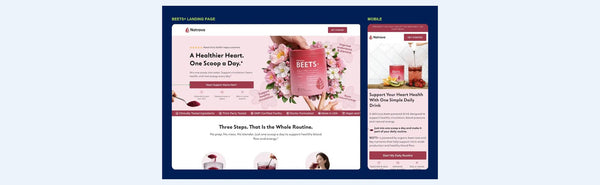
On the thank you page, Paddy says every brand should have a post purchase survey, calling it the most underused tool there is. For the homepage, his structure on mobile is a hero image of the product in use or in its environment, then a title, a subtitle, social proof and a call to action. We recently rebuilt the Cadence homepage, and Jordan calls it out in the episode as clean and simple. See the Cadence case study for the wider programme.
Traffic
Where should brands send paid traffic?
Looking at what our brands are doing, Paddy says many should send traffic to a bundle page, a quiz page or a product page. Listicles and advertorials come in once the creative system is working: deep research into every pain point and persona, a list of angles, and enough spend on an angle that you are on the second or third batch of creative. We also build evergreen sales pages for broad angles such as daily hydration, rather than going too niche too quickly.
As a rough guide, higher AOV and bigger ranges lean towards the homepage or collections, while Meta traffic usually does well on the product page. A good product page should convert cold traffic, meaning people who have seen two or three ads in one sitting. Our Shopify landing pages page shows how we build for each angle.
Tools
What tools does PM Digital use for CRO and testing?
Paddy names the tools we use most: Intelligems for split testing, AB Genius as the other A/B testing app with lower cost and more complex price testing, KnoCommerce for post purchase surveys, and heatmap.com or Microsoft Clarity for heatmaps. Where we do not custom build pages, we use Replo or Instant.
Every page and split test is designed in Figma, then custom developed on Shopify. Each brand has its own development set up with an agent per brand that our developers manage, plus reusable components so we can ship faster. We use Higgsfield for some image work, and our CRO Brain pulls every call, Slack thread and test learning for a brand into one place, so the team keeps learning about the audience. Paddy is honest that AI does the heavy lifting but people still finish the copy.
Your brand
How does this apply to subscription and apparel brands?
Subscription brands get the most from this episode. Paddy picks out Cadence and Cornish Seaweed Bath Co as two brands doing well right now, both with great products, founders at the front and offers built around a routine. Our verified results back up the focus on offers and the widget. On Avantera Health, one offer test lifted conversion 13%, and another experiment raised the share of orders on subscription from 90% to 97%, as shown in the Avantera case study. On Kiko Vitals, the rebuilt product page grew subscription sales 64%, as set out in the Kiko Vitals case study. Our subscription CRO page and our guide on how to increase subscription take rate on Shopify go further.
Apparel brands can borrow the gifting idea. Exclusive pieces that only loyal customers or members get, a hat for example, give people a reason to stay and something to show off. The product page advice carries over too: treat the gallery as a story, not a row of flat shots. See our apparel CRO page and the Ripley Rader case study.
Takeaways
What to take from this episode
- Fix speed, bugs, the subscription widget and accessibility before you test anything else.
- Prove the angle in creative before you build a landing page around it.
- Pair a first month discount with gifted tiers that grow with tenure, and show them on the widget.
- Add a post purchase upsell to a bigger quantity, since it costs nothing extra to acquire.
- Judge metrics together, not one at a time, and refresh offers when they run out of steam.
- Put a post purchase survey on the thank you page.
Want more? Browse the CRO Learning Hub for every guest spot and Funnel First episode, hear Paddy on the eCommerce Evolution podcast, the Replo podcast and at the DTC Growth Summit, or read our full guide to subscription CRO. To see how we work, visit PM Digital or our Shopify CRO agency page.
FAQ
Subscription CRO offers FAQ
What offers work best for subscription brands?
What is tiered gifting in a subscription offer?
Why do post purchase upsells work so well for subscription brands?
What should a brand fix before running A/B tests?
Who is Jordan O'Connor?
Where can I watch more of Paddy as a guest?
Details come from the Retention Live episode 11 video, its YouTube description and its transcript. Facts about Retention For Brands come from retentionforbrands.com and its YouTube channel. The 40 to 50 percent figure is Paddy's statement in the episode and description. PM Digital results link to their case studies.
How we work
Built for what happens after the click.
Most brands don't need more traffic. They need the traffic they already pay for to convert.
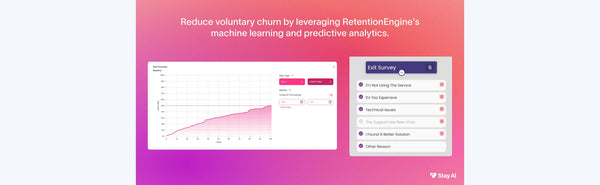
We work on what happens after the click, on the CRO and Scale Plan. Decisions are driven by the data in the CRO Brain, with PMD Cortex AI supporting the team, and a programme of tests rather than one lucky win.
The founder and the team
Paddy McLarnon, founder, and the team that does the work.
Paddy McLarnon founded PM Digital and has been a name in CRO for the last four years. He takes the first call with every brand himself, and stays close to the strategy. He has spoken at DTC Growth Summit in Miami and New York, and hosts the Funnel First podcast.
Meet the agency
Our team
The in-house team behind the work.
Your pod does the work, and the whole team backs it. Plus you, in a dedicated Slack channel with all of them.


