


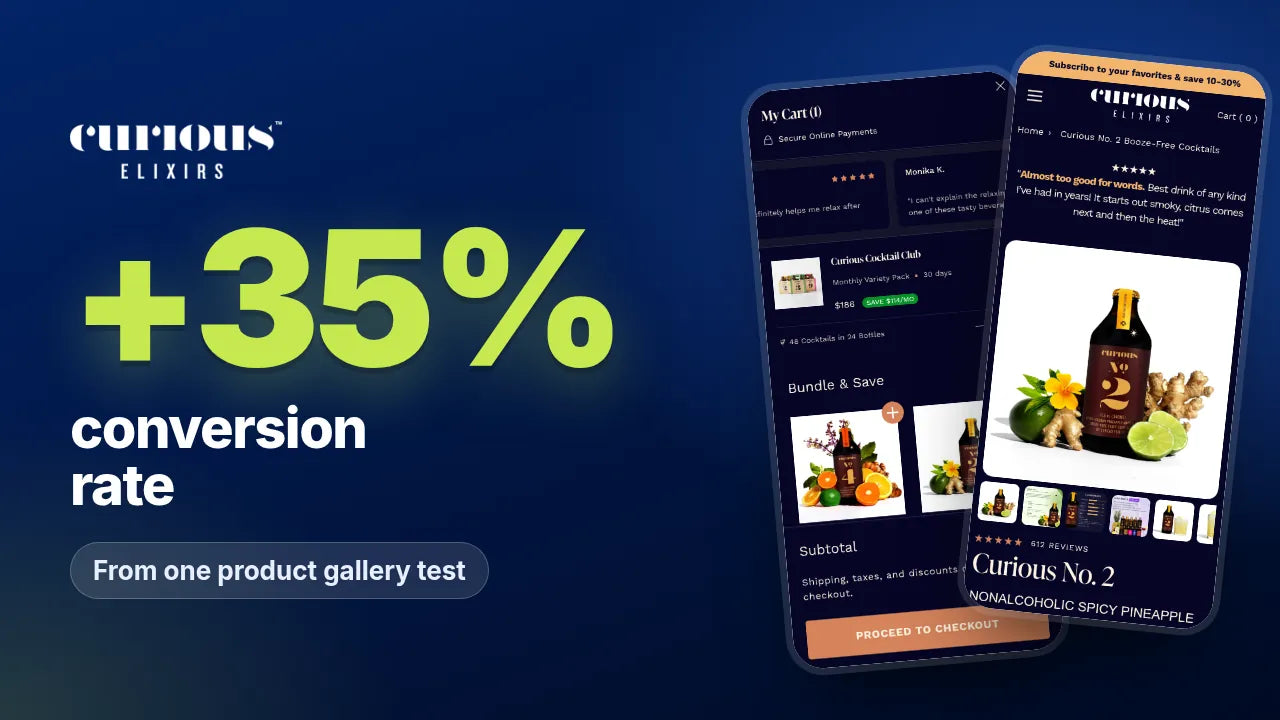

Subscription CRO: The Complete Guide for Shopify Brands
Subscription CRO is conversion rate optimisation judged on recurring revenue, not first orders alone. It improves how many visitors choose a subscription, how much each visitor is worth over time, and how many of those subscribers stay. On Shopify, that means testing the offer, the buy box, the cart and what happens after checkout, then reading every result on take rate, revenue per visitor and retention together.
Most CRO advice is written for one-off purchases. A higher conversion rate is treated as the win, and the test ends at the thank you page.
For a subscription brand, that is only half the picture. A change that wins more first orders can still lose money if it pulls in subscribers who cancel before the second delivery.
This guide covers how we run subscription CRO for Shopify brands. Every result below comes from a published PM Digital case study, and we say where a figure reflects a wider partnership rather than one test.
How subscription CRO differs from standard CRO
The tools are the same: research, hypotheses and A/B tests. What changes is the scoreboard.
| Question | Standard CRO | Subscription CRO |
|---|---|---|
| Main metric | Conversion rate and revenue per visitor | Take rate, subscription revenue per visitor and retention |
| Where the work ends | The order confirmation page | The second, third and later deliveries |
| Biggest risk | Testing changes too small to matter | Winning the sign-up and losing the subscriber |
| Offer question | Which offer wins the most orders? | Which offer wins subscribers who stay and stay profitable? |
The rule we work to: give customers a reason to subscribe, then a reason to stay. A test that only does the first is not finished.
The metrics that decide a subscription test
Agree what a win looks like before the test starts. These are the numbers we read together.
If you are new to the revenue side of this, our guide to revenue per visitor explains why it beats conversion rate as a decision metric.
Where subscription CRO happens on a Shopify store
Subscription decisions are made in five places. Most brands only test one of them.
1. The offer
A plain Subscribe & Save percentage is often not enough once you have a range to explain and a habit to sell. The offer is usually the biggest lever, so test it before you spend months on layout.
On the Cadence case study, we tested 10 offer structures. They included 30% off the first subscription order, 15% off recurring deliveries, an exclusive Cadence cap and gifts spread across future deliveries.
Spreading gifts across deliveries matters. It gives the customer a reason to start, and a reason to still be subscribed when the third box arrives.

Those come from 12 months on our CRO & Scale Plan, not from a single test. They still show the principle clearly: the offer did more than another layout change would have.
2. The buy box
If a customer cannot see what they pay, how often it arrives and how to pause or cancel, fewer people subscribe. Some of those who do will ask for a refund.
That is exactly what we found on the original Kiko Vitals product pages. Refunds were coming from people who did not know they had subscribed.
We rebuilt the buy box and cart on every product page with one structure. The one-off price, the Subscribe & Save price with the saving spelled out, the delivery frequency and "pause, skip or cancel anytime" in plain sight.
During the partnership, Kiko Vitals' subscription sales through Appstle rose 64% compared with the four months before. That figure reflects the store's overall performance, not revenue attributed only to our work. Online store one-off orders grew 3% in the same period, so almost all of the growth came through subscription.
3. How the saving is framed
When subscription is already the default, a deeper discount is rarely the answer. The framing of the deal often matters more.
For Avantera Health, we tested how the subscription offer and pricing were presented on the Elevate product page. That covered the size of the first-order discount, how the monthly price was framed and what sat next to the button.

One experiment lifted subscription order share from 90% to 97%, at 97% confidence. Even with 90% of orders already on subscription, there was still room to grow by explaining the deal better.
4. The cart
Some visitors decide on the product page. Others only weigh up subscribing when they see the basket total.
For Natrava, we rebuilt the subscription upgrade block in the cart drawer. It now spells out the saving, free shipping on the first subscription order and "modify, skip or cancel anytime", with a single Upgrade and Save button.

The test ran for two weeks, with about an 85% probability that the variation was best. That makes these observed results rather than a conclusive uplift, and the case study says so.
The interesting part is what did not move. Overall subscription share barely changed. The gain came from turning more visitors into customers, which is why we read subscription revenue per visitor and not mix alone.
5. After checkout
Subscription CRO does not stop at the order. Avantera's support tickets and cancellation feedback showed two things.
Some customers did not always realise they were buying a subscription. When people cancelled, it was usually budget or uncertainty about the benefits, not the product.
Both of those point back to the site. Clearer terms reduce accidental subscribers, and better product education reduces doubt later on. For the later part of the journey, see our guides to subscription churn reduction, post-purchase upsells and Klaviyo flows for lifetime value.
None of the wins above came from a bigger discount. They came from a better reason to subscribe, and from making the terms impossible to misread.
Mistakes that make subscription tests lie
These are the patterns we see most often when a subscription test looks like a win and is not.
Where to start
If you are planning a subscription CRO programme, this order usually pays back fastest.
- Read your support tickets, cancellation reasons and refund requests first.
- Fix any buy box or cart where the price, frequency or way out is unclear.
- Test the offer structure, including gifts across deliveries, not just the discount size.
- Add a clear subscription upgrade in the cart.
- Match each ad angle to a landing page that carries the same subscription argument.
For the buy box and default plan tests in more depth, read how to increase subscription take rate on Shopify. For paid traffic, our Shopify landing pages service covers pages built per ad angle.
Before you launch any test, check you have enough traffic to read it. Our A/B test sample size calculator helps you plan that.
Doing it yourself or with an agency
You can run most of this in house with a subscription app, an A/B testing tool and someone who owns the numbers. The hard part is keeping the discipline to judge tests on retention as well as conversion.
If you want help, compare a few specialists first. Our review of the best CRO agencies for subscription brands lists what to look for. Our own Shopify CRO agency service covers this work as part of a full-funnel programme, and our homepage sets out how we work.
You can see the full stories behind these figures on our case studies page.
Frequently asked questions
What is subscription CRO?
What should a subscription brand test first?
Is a higher subscription take rate always better?
Do I need a bigger discount to get more subscribers?
Does PM Digital run subscription CRO for Shopify brands?


How we work
Built for what happens after the click.
Most brands don't need more traffic. They need the traffic they already pay for to convert.
We work on what happens after the click, on the CRO and Scale Plan. Decisions are driven by the data in the CRO Brain, with PMD Cortex AI supporting the team, and a programme of tests rather than one lucky win.
The founder and the team
Paddy McLarnon, founder, and the team that does the work.
Paddy McLarnon founded PM Digital and has been a name in CRO for the last four years. He takes the first call with every brand himself, and stays close to the strategy. He has spoken at DTC Growth Summit in Miami and New York, and hosts the Funnel First podcast.
Meet the agency
Our team
The in-house team behind the work.
Your pod does the work, and the whole team backs it. Plus you, in a dedicated Slack channel with all of them.


