



eCommerce Evolution Podcast: Paddy McLarnon on Full Funnel CRO
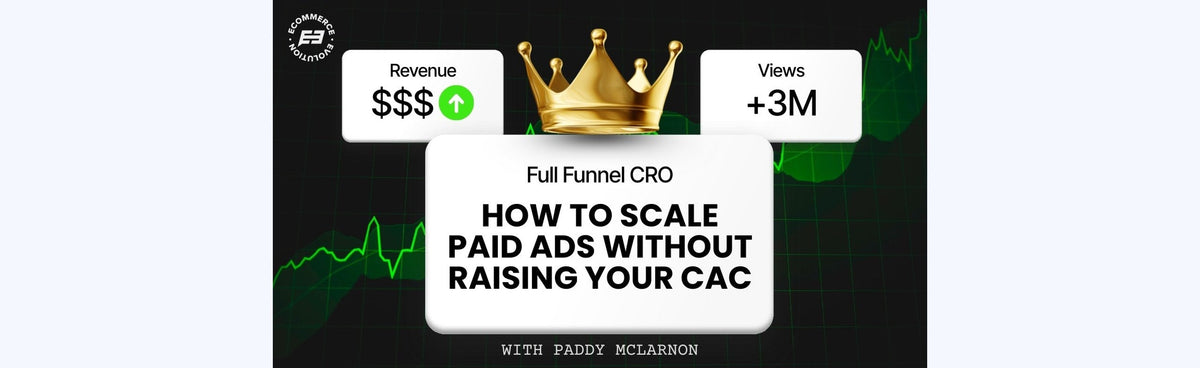
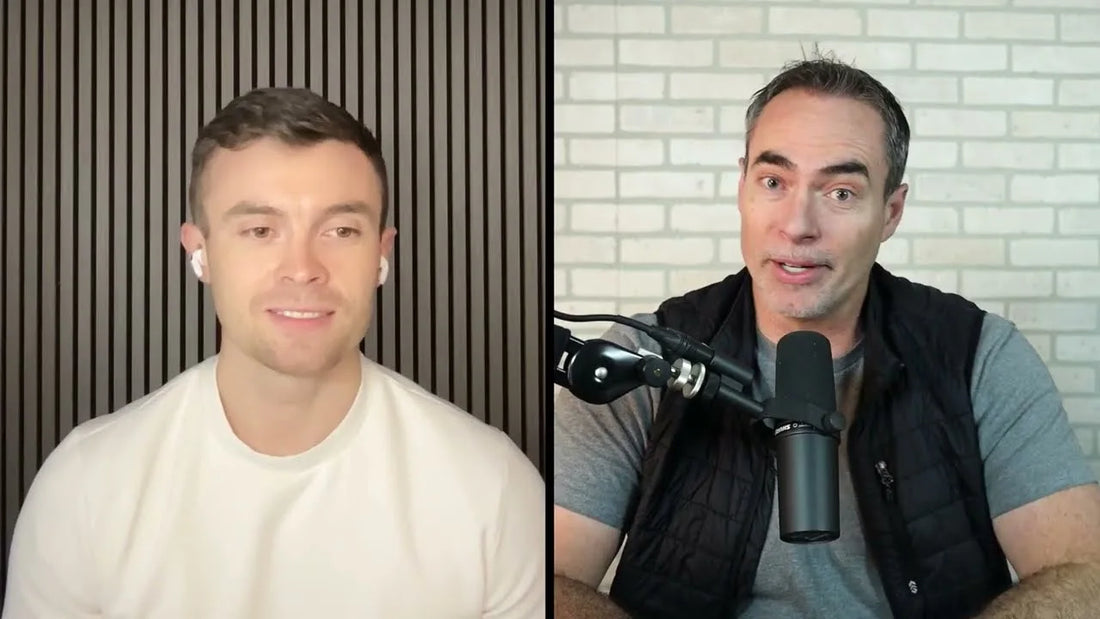
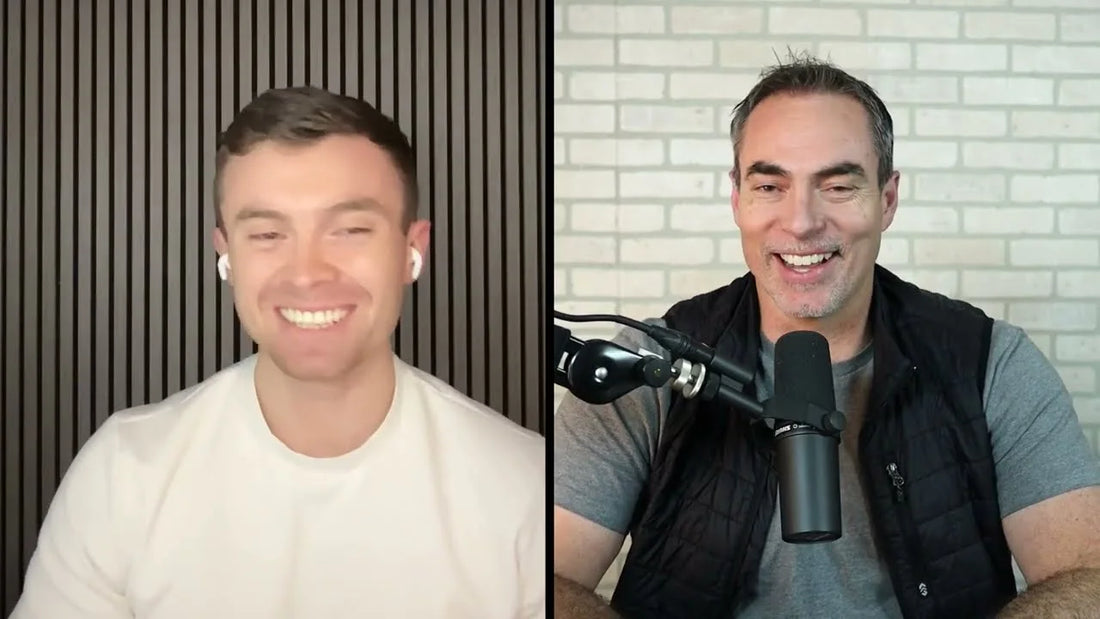
Short answer: On the eCommerce Evolution podcast, Paddy McLarnon, founder of PM Digital, joins host Brett Curry of OMG Commerce to break down full funnel CRO: matching the landing page to the ad and the traffic, advertorials and listicles, value stacking, customer surveys, and how subscription brands raise take rate without raising churn.
Brett and Paddy met at the DTC Growth Summit, first in New York and then in Miami, where Paddy spoke. You can read about that talk in our DTC Growth Summit post. Brett runs an ads agency focused on YouTube and Google, so the episode starts from a question every paid media team should ask: what happens to the visitor after the click?
The show
What is the eCommerce Evolution podcast?
eCommerce Evolution is hosted by Brett Curry, CEO of OMG Commerce. Paddy was the guest on episode 337, published on 19 March 2026, titled Full Funnel CRO: The Post Click Playbook for 7, 8 and 9 Figure Ecommerce Brands. You can listen on Apple Podcasts or watch it on the OMG Commerce YouTube channel.
Brett sets the scene with a trade show comparison. A brand can spend a fortune on a booth, then sit on their phones while people walk past. Paid media is the same: brands spend six or seven figures a month on ads, and then do very little with the people who arrive.
Common mistakes
What is the biggest CRO mistake brands make?
Paddy's first answer is that brands send cold, warm and hot traffic to the same page. Most people who click an ad are not ready to buy yet. They may have seen the brand once or twice, so they need educating and their objections handled. Brett puts it well: a restaurant talks to its regulars differently from a first time customer, yet most landing pages say the same thing to everybody.
The second mistake is not building landing pages at all. Paddy is honest that this depends on the niche. Fashion is a harder case for long landing pages, because nobody needs a long argument to buy a pair of jeans. Brands that solve a problem, or go against the norm, have the most to gain.
Congruency
How should the ad carry through to the landing page?
Brett borrows an idea from the retail book Why We Buy: shoppers walking into a store ask whether they are in the right place. Visitors ask the same question on a landing page. Paddy's view is that a listicle, a product page, a collection page and a homepage are all landing pages in the end. What matters is the angle of the copy and where the visitor sits in the funnel.
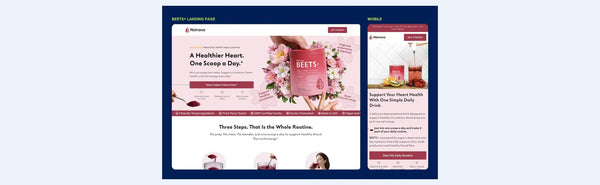
For a brand with no landing pages, Paddy says we would usually start with a listicle and an advertorial, and optimise the product page, because that is where people buy and where we can get closest to revenue. The two things to work on are the copy angle and the offer. His rule for advertorials: if the customer puts the product in them or on them, you can go deep into the pain point and present the product as the solution. Our post on listicles that convert cold Meta traffic goes further.
Real examples
Do advertorials and listicles really work?
Paddy shares two examples without naming the brands. For a women's brand, we built a campaign specific landing page with a mini listicle inside it: four reasons why, in a section you could swipe across. For a subscription brand selling a supplement for blood pressure, we went through their reviews and survey answers, found the reason customers cared most about, and built an advertorial that educated an older audience on the warning signs. Paddy says subscription intake rose as visitors went from that advertorial to the buy box.
Should the offer sit on the landing page, or should the page push people to the product page? Paddy's answer is to test it, because nobody knows the answer for your brand until you do. Brett agrees, and adds that the winning combination of ad angle, audience and page changes when any one of them changes. That is the thinking behind our Shopify landing pages.
Value stacking
What is value stacking and how do you use it?
Most brands, Brett says, do not have a price problem. They have a value problem. Paddy explains value stacking with a pair of earbuds: the same price feels very different when the offer lists everything that comes with it. Supplement brands do this by showing what the separate ingredients would cost against one daily product.
Paddy walks through a mineral supplement client from his Miami talk. As an example, the key minerals bought separately might cost $250 a month, against a $60 a month subscription for one pill. He says we built about eight to 12 variations over two to three months, and cost per acquisition held steady or fell while the brand could put more spend behind its campaigns. The point is that the page is judged on CPA and spend, not on click through rate.
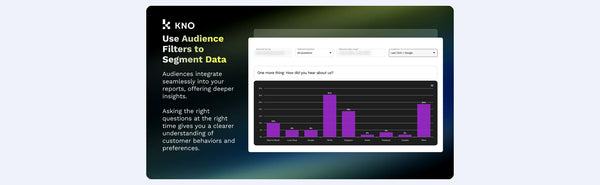
Where does the value stack come from? Customer research. Paddy recommends post purchase surveys, emailing your own customers and reading long reviews, because customers have already told you why they bought. Our model is simple: what do they say, what do they see, what do they click?
The right metric
Why can conversion rate mislead you?
Brett makes a sharp point: you could triple your conversion rate tomorrow by switching off all top of funnel ads and running branded search only, and you would have done serious damage to the business. Paddy adds that you could also just drop the price. The real goal is more new customers at an acceptable CAC, who spend more over time. Some pages hit the number but cap out on spend, especially on Meta, so you need a different page to break through. Our guide to revenue per visitor explains the metric we use instead.
Subscriptions
How do subscription brands raise take rate?
Paddy says in the episode that one brand we work with has reached a 72% take rate, with no tricks and no opting people into a subscription they did not want. It starts with the offer. Huge month one discounts or piles of extra product get people in, but they also cause churn, because one common reason people cancel is having too much product.
- Plan months two to five as well as month one. If your average subscriber stays three months, a low cost, light gift in month three can add a month or two of profit.
- Do not stack discounts. Multi pack one time offers with a subscription discount on top give away margin.
- Sell the routine. Talk about daily use and habit across the landing page, the homepage and the product page.
- Give value that is not more product. A shaker, a bottle or a genuinely useful guide keeps people subscribed without adding to the pile.
Paddy uses Cadence as an example. With runners becoming a big group of customers, subscribers get rewards such as a running cap, a water bottle and a long guide from their head scientist on cramping and fuelling for races. On our CRO and Scale Plan, Cadence reached around a 70% subscription take rate, peaking near 80%, as part of 389% revenue growth over 12 months. Read the Cadence case study, or our guide on how to increase subscription take rate on Shopify.
Episode guide
What is covered in the episode?
Here are the chapters from the episode description, so you can jump to the part you need.
| Time | Chapter |
|---|---|
| 00:00 | Introduction |
| 05:01 | The biggest CRO mistakes brands make |
| 07:42 | Ad to lander congruency |
| 09:36 | Advertorials and listicles: real examples |
| 16:56 | Offer stacking and value perception |
| 19:55 | Using customer surveys to build better copy |
| 25:13 | Why conversion rate can mislead you |
| 29:27 | How to hit a 72% subscription take rate |
| 36:48 | Subscription offer breakdown: real examples |
| 46:10 | Buy box optimisation and pricing psychology |
| 50:13 | Email, SMS and follow up flows |
Buy box
How should the buy box handle quantity and price?
Paddy's first advice is to test pricing, and to test shipping too. Brands often give free shipping as a selling point when shipping could be a meaningful share of revenue. He says we have seen tests where charging for shipping converted better than free shipping. He also suggests:
- Keep choices to two or three options, so shoppers are not overloaded.
- Use the middle option as the anchor, with notes around the selector that make it the obvious pick.
- Test delivery frequency, and tell people how long a pack lasts.
- Watch churn on bundles. Paddy says bundles have shown higher churn for some brands because people subscribe for the extra discount, so leading with the hero product can work better.
Our subscribe and save best practices post lists tests worth running.
Follow up
Where do email and SMS fit in full funnel CRO?
We pass email and SMS to specialist partners, but Paddy shares what we see working: a plain text welcome email written by the founder, education on what the product will do and why to keep taking it, win back emails a few months after someone cancels, and cart abandonment as well as checkout abandonment. His warning is about stacking discount after discount. Brands give value but do not describe it enough. Brett adds that the founder's story is often the best performing ad, and works on the landing page too.
Your brand
How does this apply to subscription and apparel brands?
For subscription brands, almost everything in this episode applies: offer structure, take rate, churn and the buy box. Our subscription CRO page shows how we work. For apparel brands, Paddy is clear that long landing pages are a harder fit, so the focus moves to the product page, the offer and bundles. See our apparel CRO page and the Ripley Rader case study.
Takeaways
What to take from Paddy on eCommerce Evolution
- Match the page to the traffic: cold, warm and hot visitors need different pages.
- Work on the copy angle and the offer first, because they sit closest to revenue.
- Build value stacks from what customers tell you in surveys and reviews.
- Judge pages on CAC, spend and lifetime value, not conversion rate alone.
- For subscriptions, design the offer to reduce churn as well as to win month one.
Want more? Browse every episode and guest spot in the CRO Learning Hub, watch the latest Funnel First episode on high converting landing pages with Jurni, or see Paddy on the Replo podcast. To see how we work, visit our Shopify CRO agency page or the PM Digital homepage.
FAQ
eCommerce Evolution podcast FAQ
What is the eCommerce Evolution podcast?
What is full funnel CRO?
What is the biggest CRO mistake Paddy sees?
Should the offer go on the landing page or the product page?
How do subscription brands raise take rate without raising churn?
Details come from the eCommerce Evolution episode, its YouTube description and the published episode transcript. Figures such as the 72% take rate, the $250 and $60 example and the shipping tests are Paddy's own statements in the episode. PM Digital results link to their case studies.

How we work
Built for what happens after the click.
Most brands don't need more traffic. They need the traffic they already pay for to convert.
We work on what happens after the click, on the CRO and Scale Plan. Decisions are driven by the data in the CRO Brain, with PMD Cortex AI supporting the team, and a programme of tests rather than one lucky win.
The founder and the team
Paddy McLarnon, founder, and the team that does the work.
Paddy McLarnon founded PM Digital and has been a name in CRO for the last four years. He takes the first call with every brand himself, and stays close to the strategy. He has spoken at DTC Growth Summit in Miami and New York, and hosts the Funnel First podcast.
Meet the agency
Our team
The in-house team behind the work.
Your pod does the work, and the whole team backs it. Plus you, in a dedicated Slack channel with all of them.


